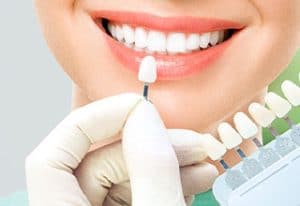
What is an implant? Today’s dental implants are a routine treatment approach recommended by dentists for the prosthetic restoration of lost teeth. What does implant mean? The structure that functions as the root of a tooth lost due to disease, accident, or injury is called an implant. Implant treatment is a very necessary method for dental health and is preferred by many patients. Additionally, with the help of an implant, which is an artificial tooth root, a replacement tooth or bridge is easily fixed. The implant, which is fused onto the jawbone, is the closest thing to a natural tooth. This is because the implant can stand alone without affecting the neighboring teeth.
Osseointegration is the name given to the process of the dental implant fusing with the bone. If this process is successful, you do not need to be afraid or hesitant about activities such as eating, chewing gum, and speaking.
Most dental implants are made of titanium or titanium components, which allows them to integrate better with the bone and not be seen as a foreign body by our body. In addition, thanks to technological and scientific developments, placing dental implants has become easier. Today, the success rate of dental implants is 98 percent.
How is an implant done? The placement of a dental implant requires several surgical procedures. To ensure your implant fits perfectly and you can have a healthy oral structure, you need to take some precautions. Here are the step-by-step dental implant stages:
After going through these stages for the placement of your implant, you can now have a healthy smile. An implant not only improves your smile but also helps you with speech problems caused by your jaw structure. Therefore, you should never neglect your teeth for your health. At Hayat Diş, we use German-made Medentika in the implant construction process.
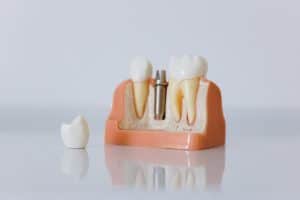
Implant treatments, which provide permanent solutions for missing teeth, offer many long-term benefits to the person who gets them. These benefits can be listed as follows:
These are the advantages that implant treatment provides to people. Those who are hesitant about getting it can reconsider by taking these advantages into account.
People should be very careful about what they eat during the implant treatment process. If the implant stitches are not taken care of, the patients’ healing may take a long time. You can start eating and drinking approximately 2 hours after the procedure. However, you should limit the food and drinks you consume until your implant stitches have healed.
For example, you should not consume hot foods and drinks such as coffee, tea, milk, and soup in the first week. Instead, it would be a much better choice for your health and that of your implant to consume cold and soft foods such as yogurt, ice cream, and fruit puree.
Hard foods such as carrots, apples, and plums should be avoided for a while after the implant. Since spicy foods can irritate your implant stitches, you should also avoid eating them until your stitches are completely removed. In addition, it is very important to avoid acidic foods and drinks for your implant stitches to heal faster.
Following the implant procedure, there are some instructions that must be followed for the procedure to be effective. If these instructions are followed, the person can heal faster, and possible post-implant swelling situations can be prevented. The do’s and don’ts after the applied implant treatment are as follows:
If you pay attention to all these tips, you can complete your healing process faster and with less pain.
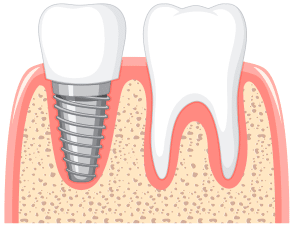
After the implant procedure is done, some pain will be felt. This pain is quite normal. The dentists who perform the application anticipate that this pain may occur and apply effective painkiller medication treatments to their patients. It is possible to get rid of the pain that occurs after implant placement with these painkiller medications. This pain that occurs after implant treatment is about as much as a normal toothache. So there is nothing to fear. After a certain period of trouble-free operations, the presence of the implants will not even be noticeable.
In some cases, depending on the patients’ fear and anxiety levels, dentists apply general anesthesia during the procedure. But this is not valid for everyone. This procedure is for people who do not want to feel pain during implant placement. In addition, the person undergoing the implant procedure should be kept in a hygienic place before and after the surgery. Otherwise, there is a risk of infection, and worse results may occur. People who think, “Will I feel pain during implant placement?” should not worry too much. As can be seen, implant treatment procedures are not treatments that are extremely painful. On the contrary, the anesthesia and painkiller treatments used during and after the treatment provide great advantages to individuals. Therefore, people who are hesitant about pain can choose implant treatment with peace of mind.
People with missing teeth and gum recession problems experience various functional and aesthetic issues. First of all, it is impossible to chew effectively in the absence of teeth. In addition, the presence of missing teeth creates numerous problems in the jaw joint as well as changes in the oral anatomy.
As a result of the person’s changed oral form and problems in the jaw joint, speech problems may arise. Consequently, implants are the best option for people who have lost their teeth due to disease, decay, trauma, or other reasons.
In the jawbone where there are no teeth, resorption begins to occur over time. If the implant is placed after the tooth is extracted, the amount of resorption is significantly reduced. However, if the surgical implant is not placed immediately, significant bone loss occurs in the mouth, which prevents the patient from using the prosthesis. Surgical implant treatment for the lower and upper jaw can be used in such cases. For patients complaining of intense pain in the tooth and gum swelling, root canal treatment is recommended. On the other hand, other situations where implants are used are as follows:
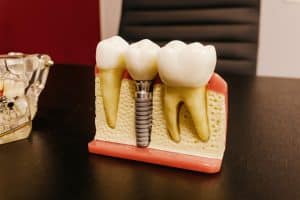
Since implant treatment consists of several stages, the duration of the implant can vary between 3-6 months. In the first stage, the placement of the implants in the jawbone takes 3-4 minutes for each tooth. In the next stage, a period of 3-6 months is expected for the placed implants to fuse with the jawbone. After this stage, the prosthesis application begins. The implant process can vary for each patient.
One of the most common concerns today is the cost of implants. An implant, which is one of the treatments for repairing missing teeth, is a treatment method used in the absence of one or more teeth and is the most similar to a real tooth. Dental implants, which are a surgical intervention, are one of the most popular treatment options in the oral and dental health sector because they have such a high success rate.
Although implant treatment may seem more expensive than other treatment options at first glance, it deserves its price because it can be used for many years and provides excellent comfort. In addition, the price varies according to the quality of the implants used, the type of material used to make the implant, and the number of implants placed in your mouth. Hayat Diş can provide you with the best information about implant surgery and current implant prices. Especially as the best address for Ankara implants, Hayat Diş provides the best possible implant service.
You can have the smile you dream of with our teeth whitening service!
Is there an age limit for getting an implant?
The first condition for getting an implant is that the bone structure has completed its development. For this reason, implants are not performed on people who have not completed the age of 18. However, since there is no upper age limit for getting an implant, even very old people can get implants.
Does smoking affect implants?
Smoking, which weakens the hard and soft tissues in the mouth, affects the application of the implant as well as the healing process after the application quite negatively. For this reason, dentists recommend that the person quits smoking at least 3 months before the implant.
Is getting an implant a painful procedure?
Implant procedures, which were quite painful in the past, are now as painless as possible with the help of techniques such as local and general anesthesia used by dentists.
What is the treatment process for dental implants?
In dentistry, the completion of prostheses at the end of implant treatment takes longer than in conventional treatments because it is necessary to wait 2.5 to 4 months for the titanium structure to integrate with the bone, and an additional 6 months if any intervention is made to the jawbone or if a sinus lift procedure is applied in the upper jaw. However, the results obtained at the end of this period are quite satisfactory and much longer-lasting.
What are the advantages of dental implants?
Especially in patients who have been toothless for many years, the existing prostheses start to lose their fit over time due to the continued changes in the bone, causing them to move and create sores. Prostheses made on implants are made on a fixed foundation, so they do not have the feature of moving or coming out of the mouth. They can be applied in people who do not want removable prostheses or where the bone has lost its retention.
Is the surgery for dental implants difficult?
Operations performed under local anesthesia by numbing only the area where the dental implant will be placed are painless. The healing process is overcome by taking the prescribed medications before the operation, using antiseptic gargles after the procedure, and good oral hygiene.
Will my face swell a lot after the dental implant operation? Will I have a lot of pain?
Slight swelling or color changes in the cheek are expected, but the edema will decrease quickly with the application of a cold compress for the first 24 hours. Severe pain is not seen; the painkillers recommended by the doctor are sufficient to easily control the pain that may occur on the first day.
What is the dental implant process like? How long will it take for my teeth to be completed?
It is expected for the implants to fuse with the bone in an average of 3 months in the upper jaw and 2 months in the lower jaw, and then porcelain crowns are placed on them. If additional procedures have been applied in the presence of thin or inadequately high bone, the waiting period may be extended up to 6 months.
Is suture-less dental implant possible?
It is possible in cases where a single tooth is extracted and an implant can be placed in the same session in the extraction socket without making any incision.
Are dental implant applications suitable for me?
It is contraindicated in individuals with a significant systemic disease that is not under control, or who are undergoing radiotherapy or recent chemotherapy. However, if the disease is brought under control, an implant can be done on anyone. If sufficient bone is not detected during the examination, the implants can be placed after first creating a bone infrastructure with additional procedures.
Are dental implants long-lasting?
The life of a dental implant is like that of natural teeth. As long as normal oral and dental care is done well, it can be used for many, many years.