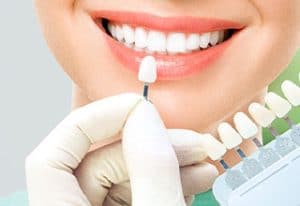
As it is among the most noticeable areas of the face, protecting oral and dental health is of great importance. It is a universally accepted fact that having well-aligned teeth and an aesthetic smile makes life more valuable with the positive outcomes it provides in social life. Therefore, having a healthy smile and smiling without fear is quite necessary for all people who desire it. Orthodontic treatment is the most effective and permanent solution for individuals of all ages to achieve the smile of their dreams. So, what is orthodontic treatment?
The question at the forefront of the minds of everyone who wants to correct the irregularities in their teeth and achieve their dream of a perfect smile is, “What does orthodontic treatment mean?” Young people, especially those reaching adolescence and experiencing a lack of self-confidence due to the appearance of their teeth, want to have information about brace treatment. So, what is orthodontic treatment? To whom can orthodontic treatment be applied?
Orthodontic treatment, commonly known as brace treatment, is a treatment method applied to correct crookedness, irregularities, and gaps seen in teeth and jaw structure. It aims to bring the teeth to their proper position by applying external force at certain intervals. In addition to cosmetic and aesthetic concerns, it is also used to correct various dental and jaw health problems. The main dental and jaw structure problems requiring treatment can be listed as follows:
The duration of orthodontic treatment varies from person to person depending on the extent of the crookedness in the teeth. However, the treatment steps proceed in the same course for almost every patient. So, how is orthodontics done?
Orthodontics treatment begins with the placement of brackets after ensuring that all teeth are healthy. The dental wires passed through the brackets are attached to the teeth with the help of special elastics. This is a non-strenuous procedure that takes about 1 hour. In the period after the braces are placed, routine check-ups are generally performed once a month. In these check-ups, as a result of examinations performed by the orthodontist, the wire thickness may be changed, and elastics may be placed for use between the upper and lower jaws.
If the orthodontist deems it necessary, they may extract some teeth to bring them to the required position and to fit them properly in the mouth. Although this is not a common situation, it is necessary to ensure that the patient’s jaw fits perfectly when they close their mouth and that their teeth do not overlap. After the treatment is completed, your new smile is preserved with the help of clear aligners produced according to your mouth measurements.
There are several different types of braces used in orthodontic treatment. At Hayat Dental Clinic, we determine which type of braces will be used by taking the patient’s preferences into account, so that every patient can have a perfect smile. We eliminate the risk of unsuccessful orthodontic treatment by taking all necessary precautions. There are 4 different types of braces we use when applying the treatment. It is possible to list them as follows:
Porcelain braces are more frequently preferred by people who care about aesthetics. Being less durable than metal braces can lead to an extension of the treatment period. Therefore, it is not an ideal option for those who want to get effective results in a short time.
Metal braces, on the other hand, are among the most commonly used types of braces and are quite durable. In the vast majority of treatments done with metal braces, the desired result can be achieved in up to 2 years.
Lingual braces look as if there are no braces in the mouth during the treatment period and are also called hidden braces. Since they are applied to the inner parts of the teeth, they are very suitable for those with aesthetic appearance concerns.
Clear aligner treatment is an alternative solution for those who do not want to wear braces and whose dental irregularities are not extreme.
During the orthodontic treatment, there are many important points that orthodontic patients should pay attention to. Some of these points may vary from patient to patient, and in special cases, the orthodontist informs the patient. However, protecting dental health and performing oral care regularly is a process that all orthodontics patients should follow.
It is of great importance to pay attention to oral care before, during, and after the treatment. Before orthodontic treatment is started, complete oral and dental health must be ensured. There should be no decayed teeth in the mouth, gum problems should be identified, and the cleanliness of the teeth must be ensured.
As the Hayat Dental Clinic team, we carefully perform your necessary checks and examinations before treatment with our expert and experienced orthodontists. By taking your preferences and wishes into consideration during the treatment period and utilizing our high-tech equipment, we provide superior quality service to you, our valued patients, to help you achieve the smile of your dreams. For detailed information about the orthodontic treatment process, you can visit our website and contact us for the answers to all your questions.
1- At what age does orthodontic treatment start?
It is known that the most suitable age range to begin orthodontic treatment is 9 – 14. This is because the child’s development is still ongoing between these ages, and by taking advantage of the adolescent period, it is possible to correct the irregularities in the teeth more easily.
2- What treatments does orthodontics perform?
Orthodontic treatment is performed to correct conditions that cause tooth and jaw incompatibilities and to eliminate aesthetically disturbing appearances. The most common types of orthodontic treatment can be listed as braces and clear aligners.
3- What is short-term orthodontic treatment?
Short-term or accelerated orthodontic treatment is performed by applying ultrasonic waves to the gums through vibrating devices. This method can be applied in as little as 10 minutes and provides a reduction in the treatment time by up to 40%.
4- What are the types of brackets used in orthodontic treatment?
In orthodontic treatments, metal (stainless steel) or porcelain (transparent) brackets, or in other words, braces, are used.
5- Will fixed orthodontic treatment damage my teeth?
Orthodontic treatment is not a treatment that damages the teeth; on the contrary, by ensuring the proper positioning of the teeth, it helps to achieve a more proper intraoral balance.
6- Will fixed orthodontic treatment cause my teeth to decay?
Orthodontic treatment does not have a side effect like causing tooth decay. The decay of teeth is a result that will occur due to insufficient oral hygiene, regardless of whether orthodontic treatment is received or not. The most important issue here is the care that must be shown for cleaning while the braces are in our mouths.
7- Will orthodontic treatment cause pain in my teeth?
When the braces are first placed, a slight pain may be felt because they apply a certain amount of force to the teeth, but it may not be seen in most cases. It is a matter that varies from person to person. The change felt will return to normal within 2-3 days; continuous and severe pain is not the case. If we desire the pain to be very low, we must take very good care of our braces.
8- Is it logical to extract healthy teeth for orthodontic treatment?
This is one of the most frequently asked questions. In fact, our patients start looking for a physician who will perform non-extraction orthodontic treatment. To be more descriptive, for example, the wisdom teeth of many people we know are extracted due to the risk of creating crookedness, oral hygiene, or lack of space. But as a result, they are also healthy teeth. Orthodontists also decide on orthodontic tooth extraction in the extraction decision due to both profile and symmetry, as well as lack of space.
9- Will there be a gap after the teeth are extracted?
No, there won’t be. After the teeth are extracted, the extraction gaps are closed by shifting the front and back teeth with braces. When you are examined by an orthodontist, you can ask for examples of orthodontic cases (with extractions).
10- Will my braces affect my speech badly during orthodontic treatment?
Orthodontic treatments performed with support from the front surfaces of the teeth do not affect a person’s speech.
11- What will be the frequency of my check-up visits for orthodontic treatments?
The interval for control examinations in orthodontic treatments varies between 4-6 weeks. In orthodontic treatments with extractions, this period may be more frequent in the first months.
12- Will my teeth be damaged when my brackets (braces) are removed?
The teeth are not damaged during the removal of the brackets (braces). When the brackets are removed, the adhesive substance is separated from the tooth surface. No loss of tooth enamel is seen. After the braces are removed, cleaning and polishing procedures must be performed.
13- Will my crookedness return after my braces are removed?
During the removal phase of the braces, the front 6-8 teeth are fixed to each other with a thin wire (stabilizing wire) attached to the tongue side. Thus, the return of the obtained result is prevented. This wire is definitely not visible from the outside. After the orthodontic treatment is over, be sure to try to adhere to the controls that your orthodontist has foreseen for you.
14- Will this stabilizing wire spoil my speech?
Usually, our orthodontic patients get used to this wire within 1 week and even forget its existence. These stabilizing wires are not thick enough to affect your speech.
15- The edge of my stabilizing wire broke, what should I do?
As early as possible, before the fit of the wire to the tooth is compromised, contact your orthodontist.
16- My stabilizing wire came out completely, what should I do?
The complete dislodging of the stabilizer can cause a slight return of crookedness even within 1-2 days. For this reason, make an appointment with your orthodontist to have a new one made as soon as possible.
17- How long will the stabilizing wire stay in my mouth?
It is preferred that this wire remains in the mouth for at least 5 years on average. In some cases, lifetime use is necessary; your orthodontist will inform you about this.
Ankara Özel Hayat Oral and Dental Health Clinic
For Information and Appointments: 0312 335 01 61